When the power goes out, a portable generator can feel like a lifeline. It keeps the fridge cold, the lights on, and essential medical equipment humming. But connecting that generator to your home's electrical system isn't as simple as plugging it into any wall outlet. Doing so, known as "backfeeding," is incredibly dangerous, illegal, and can lead to severe injury, electrocution, fire, or even death—not just for you, but for utility workers trying to restore power.
This is where a generator transfer switch or an interlock kit becomes non-negotiable. These devices are the secure, legal, and life-saving pathways for safely integrating a portable generator into your home's hardwired electrical system. They prevent the utility grid and your generator from ever sending power to your home simultaneously, ensuring that critical separation between power sources.
Ready to understand the real difference and make an informed decision for your home's safety and comfort? Let's get into it.
At a Glance: Your Quick Guide to Generator Connections
- Safety First: Never backfeed your home by plugging a generator directly into an appliance outlet. It's illegal and deadly.
- Two Safe Options: Manual Transfer Switches (MTS) and Interlock Kits are the only safe ways to connect a portable generator to your home's electrical panel.
- Manual Transfer Switch (MTS): Powers a selected set of circuits. You physically switch power from utility to generator, then flip specific circuit breakers on the MTS.
- Interlock Kit: Powers your entire electrical panel. It's a mechanical device that prevents your main utility breaker and your generator breaker from being on at the same time. You manage which circuits to use.
- Load Management: MTS inherently helps prevent overload on individual circuits. With an interlock, you are responsible for balancing the load to avoid overloading the generator.
- Installation: Interlocks are generally simpler and less expensive to install. MTS installations are more involved, often requiring new dedicated circuits.
- Recommendation: For most homeowners seeking convenience and built-in overload protection, an MTS is often the preferred choice.
The Critical Danger: Why You Can't Just Plug It In
Imagine your home's electrical panel as the central nervous system of your power. It brings electricity from the utility grid to every light, outlet, and appliance. When you lose power, the natural instinct might be to find the nearest heavy-duty outlet (like a dryer or range) and plug your generator in there, hoping to power the whole house. This is called backfeeding, and it’s a recipe for disaster.
Here’s why it’s so dangerous:
- Electrocution Risk for Utility Workers: When utility power fails, linemen assume the lines are dead. Backfeeding sends electricity out from your home into the utility grid, energizing power lines that workers might be repairing. This can fatally electrocute them.
- Damage to Your Home and Generator: Your generator isn't designed to power the entire grid. Backfeeding can severely damage your generator, overload your home's wiring, and even cause electrical fires.
- Risk to Neighbors: Energized power lines can also pose a risk to anyone nearby, including children, pets, or neighbors who might come into contact with a downed line.
- Legal Consequences: Backfeeding is illegal across the United States, and violating this law can result in hefty fines and criminal charges, especially if someone is injured or killed.
The takeaway is simple: Never, ever backfeed. Safety, for yourself and others, must always come first when dealing with electricity. This is precisely why transfer switches and interlocks exist—to provide a safe, legal, and controlled connection point. If you're wondering about the overall process of wiring a generator to your house safely, a transfer switch or interlock is your first, non-negotiable step.
The Two Safe Paths: Manual Transfer Switch vs. Interlock Kit
When it comes to safely connecting a portable generator to your home's electrical system, you have two primary options: a Manual Transfer Switch (MTS) or an Interlock Kit. Both achieve the essential safety goal of preventing utility and generator power from mixing, but they do so in different ways, each with its own set of advantages and considerations.
Let's break down each one.
Deep Dive: The Manual Transfer Switch (MTS)
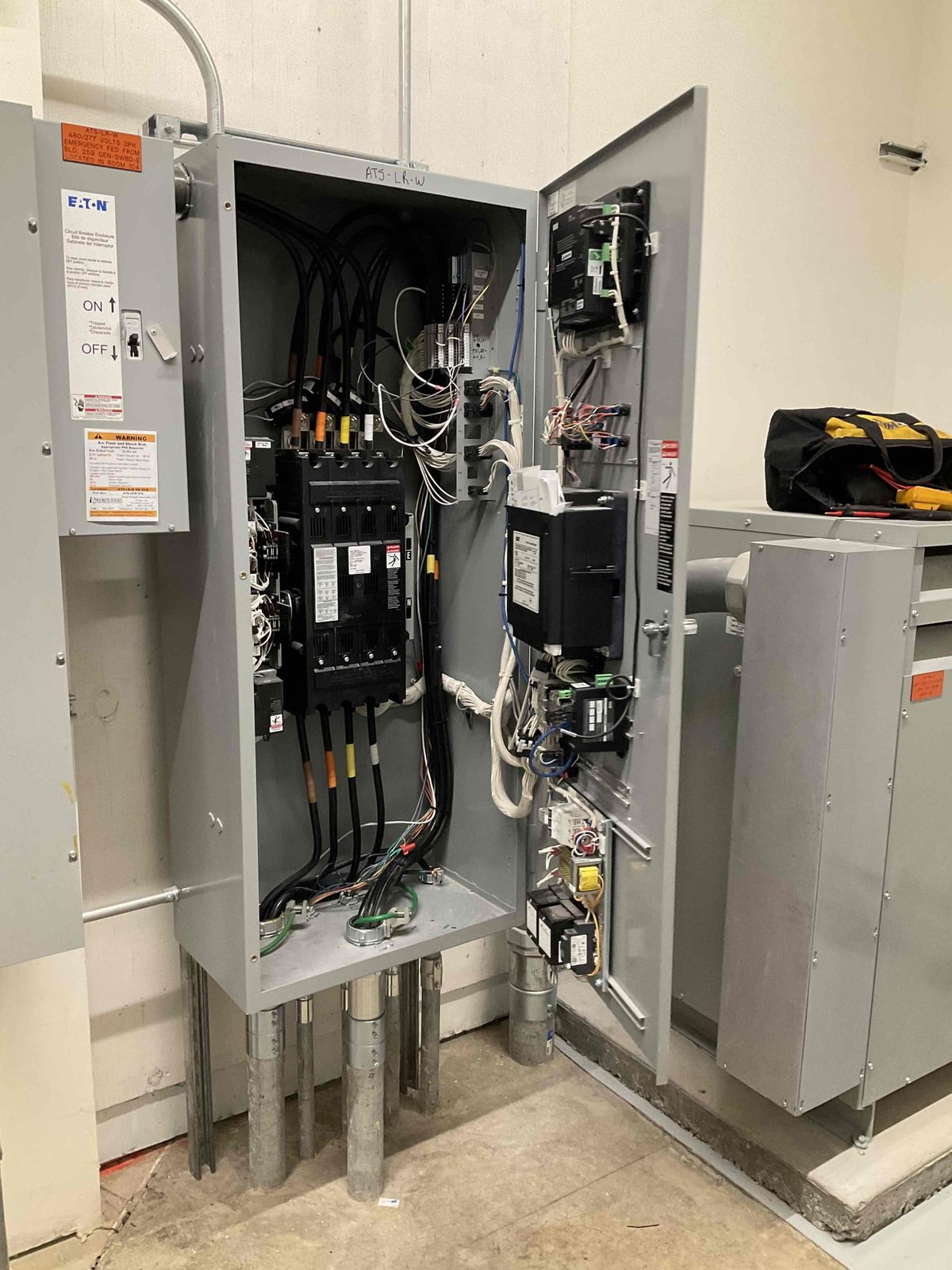
A Manual Transfer Switch (MTS) is a standalone electrical sub-panel designed specifically to handle power transfer between your utility and your generator. Think of it as a gatekeeper, physically directing electricity from one source or the other, but never both.
What It Is and How It Works
An MTS typically looks like a small, separate breaker box mounted next to your main electrical panel. Inside, it contains a robust switch—often a large rocker or toggle—that you manually operate. This switch has three positions: "Line" (utility power), "Off," and "Generator" (generator power).
Crucially, an MTS is wired to power specific circuits in your home. Before installation, you and your electrician will decide which circuits are most important during an outage (e.g., furnace, refrigerator, well pump, a few lights, maybe a specific outlet for medical equipment). These selected circuits are then routed through the MTS.
Operation:
- When utility power goes out, you start your generator and connect it to an outdoor generator inlet box, which is wired to the MTS.
- At the MTS, you physically move the transfer switch from "Line" to "Generator." This completely disconnects your home from the utility grid.
- You then flip the individual circuit breakers on the MTS itself for the appliances and lights you want to power.
Installation Snapshot: What to Expect
Installing an MTS is a job for a licensed electrician. Here’s a simplified overview:
- A 30-Amp or 50-Amp circuit breaker is added to your main electrical panel. This breaker's rating must match the MTS's rating.
- This new breaker feeds power to the MTS.
- The essential circuits you've chosen are then disconnected from your main panel and re-routed to the MTS.
- An outdoor generator inlet box is installed, providing a safe, weatherproof connection point for your generator's power cord.
During installation, the electrician will ensure the load is balanced across the MTS's circuits to prevent overloading your generator. This professional balancing acts as a built-in safety net.
Powering Specific Needs: Load Management Benefits
The biggest advantage of an MTS is its focused approach. Because you pre-select specific circuits, you inherently manage the load. An electrician helps you choose circuits that collectively won't exceed your generator's capacity, distributing them appropriately between the two "legs" (120V phases) of your 240V generator output. This minimizes the risk of overloading your generator and ensures you have power where you need it most, without having to think too hard in the dark.
The Grounding Question: How MTS Handles It
When using an MTS, your portable generator typically acts as a "separately derived system." This means the generator’s neutral-to-ground bond (if it has one, known as a "bonded neutral") remains intact. The MTS itself is designed to disconnect the neutral conductor between the switch and both the main panel and the generator, allowing the generator to establish its own neutral-to-ground connection. In this setup, the generator's frame must be connected to a ground rod or another suitable grounding electrode to ensure proper safety.
Deep Dive: The Interlock Kit
An Interlock Kit is a clever, mechanical safety device that works directly within your existing main electrical panel. Instead of a separate sub-panel, it’s a sliding plate that physically prevents two specific circuit breakers—your main utility breaker and your generator breaker—from being in the "On" position at the same time.
What It Is and How It Works
An interlock kit is essentially a metal plate that mounts over your main breaker and a newly installed generator breaker within your main electrical panel. When your main utility breaker is "On," the interlock plate slides into a position that physically blocks the generator breaker from being turned on. Conversely, when the generator breaker is "On," the plate slides to block the main utility breaker. It’s a simple, robust mechanical lockout.
Operation:
- When utility power fails, you start your generator and connect it to an outdoor generator inlet box, which is wired to a new generator circuit breaker in your main panel.
- At your main electrical panel, you first turn off the main utility breaker.
- You then slide the interlock plate to its opposite position.
- Now, you can turn on the generator circuit breaker.
- Your generator is now supplying power to your entire main electrical panel. You then selectively turn on individual circuit breakers for the appliances and lights you want to power, keeping your generator's capacity in mind.
Installation Snapshot: Simpler Setup
Installing an interlock kit is generally less complex and thus often more cost-effective than an MTS. It involves:
- Installing a new, appropriately sized generator circuit breaker (e.g., 30-Amp or 50-Amp) in an available slot in your main electrical panel.
- Installing an outdoor generator inlet box, wired directly to this new generator breaker.
- Mounting the interlock plate onto your existing main electrical panel, typically over the main utility breaker and the new generator breaker.
Because the interlock kit allows the generator to power the entire panel, there's no need to reroute individual circuits, making the wiring less intricate.
Empowering Your Whole Home (with a Catch): User Responsibility
With an interlock kit, your generator essentially powers all the circuits in your main panel. This offers immense flexibility—you can decide in the moment which circuits to energize. However, this flexibility comes with significant responsibility. You must actively manage your power usage to avoid overloading your generator. It’s crucial to know your generator's limits (especially how many watts it can provide on each 120V leg) and to only turn on circuits that fit within that capacity. Overloading can damage your generator or trip its internal breakers.
When choosing the right generator size, it’s important to factor in the maximum simultaneous load you anticipate, especially with an interlock that provides access to all circuits.
The Grounding Question: How Interlock Handles It
When an interlock kit is used, your home's main electrical panel continues to act as the primary service disconnect for your generator, meaning the main panel's existing neutral-to-ground bond remains the single point of connection. In this scenario, for safety and compliance with the National Electrical Code (NEC), your portable generator's internal neutral-to-frame bond should be disconnected. If the generator has a floating neutral (no internal bond), no modification is needed. If it has a bonded neutral, it's critical to have an electrician modify the generator to create a floating neutral so that there is only one neutral-to-ground bond in the entire system (at the main panel).
Head-to-Head: MTS vs. Interlock — A Side-by-Side Comparison
Choosing between an MTS and an interlock often boils down to your specific needs, budget, and comfort level with electrical management during an outage. Here's a direct comparison to help clarify the differences.
| Feature | Manual Transfer Switch (MTS) | Interlock Kit |
|---|---|---|
| Circuits Powered | Limited, pre-selected essential circuits only. | All circuits in your main electrical panel. |
| Load Management | Electricalian balances load during installation; inherently minimizes overload risk. User selects which circuits on the MTS. | User must actively manage power usage and balance load across 120V legs to prevent generator overload. |
| Installation | More complex: Involves rerouting specific circuits, adding a sub-panel. | Generally simpler: Installs directly onto main panel, adds one generator breaker. |
| Cost | Higher due to more complex wiring and additional components. | Lower due to simpler installation and fewer components. |
| Convenience | High: Once installed, you flip the main switch, then flip desired circuit breakers on the MTS. Simplified operation. | Medium: Requires turning off main breaker, sliding interlock, turning on generator breaker, then managing individual panel breakers. |
| Flexibility | Low: Only powers pre-selected circuits. | High: Can power any circuit in the home, provided generator capacity allows. |
| Generator Grounding | Generator acts as separately derived system. If bonded neutral, it should connect to a ground rod. MTS disconnects neutrals. | Main panel is the service disconnect. If generator has bonded neutral, it must be disconnected. Grounding is handled by main panel. |
| Skill Required | Minimal user skill during outage; expert installation. | Requires user knowledge of generator capacity and active load balancing during outage. |
Beyond Manual: A Note on Automatic Transfer Switches (ATS)
While this article focuses on manual options for portable generators, it's worth briefly mentioning Automatic Transfer Switches (ATS). An ATS is typically used with a permanently installed standby generator. It automatically detects a utility power loss, starts the generator, switches the power source, and then reverts to utility power when it's restored—all without any human intervention. ATS systems are significantly more expensive and complex, favored for critical environments like hospitals or data centers, or for homeowners who desire maximum convenience and seamless power continuity.
Making the Right Choice for Your Home
Deciding between an MTS and an interlock isn't about one being inherently "better" but about which one aligns best with your needs, budget, and comfort level.
Assessing Your Needs: Critical Circuits vs. Whole-Home Flexibility
- Do you just need the essentials? If your primary goal is to keep the furnace, fridge, well pump, and a few lights running, a Manual Transfer Switch (MTS) might be ideal. It provides a straightforward, almost "set it and forget it" approach during an outage, knowing your pre-selected circuits are covered.
- Do you want maximum flexibility? If you have a larger generator and want the option to power any circuit in your home, even if it means actively managing the load, an Interlock Kit offers that freedom. This is particularly appealing if your "critical" needs might shift depending on the season or situation.
Budgeting for Safety: Initial Cost vs. Long-Term Value
- Interlocks are generally more budget-friendly upfront. Their installation is less labor-intensive, making them a good option if cost is a primary concern. However, remember the responsibility of load management falls squarely on your shoulders.
- MTS installations tend to be pricier. The additional wiring and the transfer switch unit itself add to the cost. However, the convenience and built-in load balancing offer a different kind of value—peace of mind and simplified operation when you're under pressure.
Your Comfort Level with Electrical Management
- If you prefer simplicity: An MTS streamlines the process. You switch from utility to generator, then flip the chosen breakers on the MTS. There's less mental math about wattage and amperage in the dark.
- If you're hands-on and knowledgeable: An interlock allows you to be more granular. You can decide which appliances to run and when, provided you understand your generator's capacity and how to balance loads effectively. An active approach to essential generator safety tips will be key.
Expert Advice: When to Call an Electrician
Regardless of your choice, always consult and hire a licensed electrician for the installation. Electrical work, especially when tying into your home's main panel and utility grid, is not a DIY project. An electrician will ensure:
- Code Compliance: Your installation meets all local and national electrical codes (NEC).
- Proper Sizing: The transfer switch or interlock, breaker, and inlet box are correctly sized for your generator.
- Safe Wiring: All connections are secure and safe.
- Correct Grounding: The grounding requirements for your specific setup and generator type are met.
They can also help you map out your essential circuits and advise on load balancing, especially if you opt for an interlock.
Demystifying Generator Grounding: Bonded vs. Floating Neutral
Generator grounding is a crucial safety topic that often causes confusion. Understanding whether your generator has a "bonded neutral" or a "floating neutral" is key to proper and safe setup with either an MTS or an interlock.
- Bonded Neutral: In a bonded neutral generator, the neutral wire is connected (bonded) to the generator's frame (which is then connected to earth ground). Most portable generators are sold with a bonded neutral from the factory.
- Floating Neutral: In a floating neutral generator, the neutral wire is not connected to the generator's frame.
The National Electrical Code (NEC) requires that there be only one point in an electrical system where the neutral conductor is bonded to ground. This prevents dangerous ground loops and ensures safety devices work correctly.
Checking Your Generator: Simple Continuity Test
To determine if your portable generator has a bonded neutral:
- Turn off the generator and ensure nothing is plugged into it.
- Set a multimeter to the continuity test setting (usually indicated by an audible beep or Ohm symbol).
- Place one probe into any receptacle's neutral slot (the wider slot on a 120V outlet).
- Place the other probe firmly against the generator's metal frame (ensure good contact).
- If the multimeter beeps or shows continuity (very low resistance), your generator has a bonded neutral. If there's no continuity, it has a floating neutral.
Grounding with an MTS
When using a Manual Transfer Switch, your generator typically acts as a "separately derived system." In this setup, a bonded neutral generator should connect its frame to a dedicated ground rod or another suitable grounding electrode. The MTS is designed to keep the neutral conductor separated between the generator and your main panel, allowing the generator to establish its own neutral-to-ground bond through the external ground rod.
If you have a floating neutral generator and use an MTS, you generally would use a generator ground plug (a small plug that bonds the neutral to ground via a 120-volt outlet) and still connect the generator's frame to an external grounding electrode.
Grounding with an Interlock
When using an Interlock Kit, your home's main electrical panel remains the primary service disconnect, and its existing neutral-to-ground bond is the only required bond.
- If your generator has a floating neutral: No modification is needed. Connect the generator to the inlet box, and the main panel handles the neutral-to-ground bond.
- If your generator has a bonded neutral: For safety and NEC compliance, this bond must be disconnected by a qualified electrician to create a floating neutral. This ensures there's only one neutral-to-ground bond in the entire system, preventing potential hazards. Your electrician will be familiar with how to safely modify common generator brands for this purpose.
Understanding and correctly implementing grounding is as critical as the transfer mechanism itself. Always rely on a licensed electrician to ensure your setup is safe and compliant.
Prepping for Power Loss: Essential Steps After Installation
Installing a transfer switch or interlock is a huge step, but the work doesn't stop there. Effective emergency power management requires a bit of planning and regular maintenance.
Mapping Your Circuits (Especially for Interlock Users)
If you chose an interlock kit, you have the flexibility to power any circuit, but that means you need a game plan.
- Decide Your Essentials: Before an outage strikes, walk through your home and identify truly critical circuits: the refrigerator, freezer, furnace/AC, well pump, sump pump, essential lighting, and perhaps a dedicated circuit for medical devices or charging electronics.
- Mark Your Panel: Clearly label these essential circuit breakers on your main panel. Use colored tape or permanent marker so you don't have to guess in the dark.
- Prioritize and Practice: Understand that you can't run everything simultaneously. Prioritize. For example, maybe the microwave only comes on when the toaster is off. Practicing this sequence (even in daylight) will make a real outage less stressful.
- Consult Your Electrician: Ask your electrician to help balance the load for your most critical circuits when they install the interlock. They can often suggest a few substitutions if needed (e.g., using a specific bathroom outlet instead of a kitchen one, ensuring they're on the same leg and only one is used at a time).
Balancing the Load (Critical for Interlock)
Portable generators typically output 120/240 volts, splitting the 240V into two 120V "legs." For optimal performance and to prevent overloading, you need to distribute your essential circuits as evenly as possible between these two legs. A difference of 5-10 amps between lines is generally acceptable. Your electrician can help you map this out, but you'll still need to be mindful when turning on appliances.
Regular Testing
Your generator is like an emergency vehicle—it needs to be ready to go at a moment's notice.
- Monthly Run: Start your generator at least once a month and let it run for 20-30 minutes under a small load (e.g., a couple of shop lights). This keeps the engine lubricated and ensures it's ready.
- Annual Load Test: Once a year, perform a full test. Connect your generator to your home via the transfer switch or interlock and power your essential circuits for an hour or two. This helps you identify any issues before a real emergency and practice your outage routine.
Fuel Storage & Maintenance
- Fresh Fuel: Gasoline degrades over time. Store fuel in approved containers in a cool, dry place. Use fuel stabilizer if storing for more than a month or two. Rotate your fuel supply regularly.
- Maintenance Checklist: Refer to your generator's manual for its specific maintenance schedule. This typically includes checking oil, spark plugs, air filters, and fuel filters. A comprehensive generator maintenance checklist can help you stay on track.
- Protect Your Investment: Store your generator in a dry, protected area.
By taking these proactive steps, you'll not only have a safe connection for your generator but also a reliable and well-managed backup power system for when you need it most. This kind of comprehensive emergency power planning makes all the difference.
Common Questions About Generator Transfer Switches & Interlocks
Navigating the world of home backup power can bring up a lot of questions. Here are some of the most common ones we hear:
Can I install one myself?
No, absolutely not. While an interlock kit might look like a simple plate, and a manual transfer switch might seem straightforward to wire, anything that connects to your home's main electrical panel and potentially interacts with the utility grid must be installed by a licensed and qualified electrician. This ensures safety, compliance with electrical codes, and prevents deadly backfeeding or system damage.
How much does it cost?
The cost varies significantly based on your location, the complexity of your home's electrical system, and the specific device chosen.
- Interlock Kit: Generally the most affordable option, with the kit itself costing $50-$200, plus electrician labor (typically $400-$800, but can be more).
- Manual Transfer Switch (MTS): The unit itself can range from $300-$1000+, with installation costs typically higher than an interlock due to more extensive wiring and the addition of a sub-panel (often $800-$2000+).
These are rough estimates; always get multiple quotes from licensed electricians.
Is an interlock really safe?
Yes, when installed correctly by a licensed electrician, an interlock kit is a perfectly safe and code-compliant method for connecting a portable generator. Its mechanical design physically prevents both power sources from being active simultaneously, fulfilling the critical safety requirement. The main difference in safety compared to an MTS comes down to user responsibility for load management.
What size generator do I need?
The size of your generator depends entirely on what you want to power during an outage.
- For critical circuits (MTS): Add up the starting watts (surge watts) of the essential appliances you want to run simultaneously, then add the running watts of all other essential items. Your generator's starting wattage capacity must exceed the highest combined starting load, and its running wattage capacity must exceed the total running load.
- For whole-home flexibility (Interlock): You'll need a larger generator (e.g., 7,500 watts to 12,000+ watts) to handle more circuits, but you'll still need to be mindful of what you turn on.
Always factor in both starting (surge) watts and running watts. Our generator sizing guide offers a more detailed breakdown.
Do I need a permit for installation?
Almost certainly, yes. Any significant electrical work that ties into your home's main panel typically requires a permit from your local building department. Your licensed electrician will be familiar with the permitting requirements in your area and can often handle the application process for you. Obtaining a permit ensures that the work is inspected and meets all safety and code standards.
Your Next Steps to Reliable Backup Power
Choosing between a generator transfer switch and an interlock kit is a significant step toward ensuring your home's safety and comfort during power outages. There's no single "right" answer; the best choice depends on your specific needs, budget, and willingness to manage your home's power consumption.
Here’s a clear path forward:
- Assess Your Needs: List every appliance and circuit you consider essential during an outage. Are you looking for minimal critical power, or do you want the flexibility to power more?
- Understand Your Generator: Know its wattage capacity, whether it has a bonded or floating neutral, and how much power it can supply on each 120V leg.
- Consult Licensed Electricians: This is the most crucial step. Get quotes from at least two or three local, licensed electricians. Discuss both MTS and interlock options with them. They can advise on the best solution for your home's existing electrical panel, your generator, and local codes.
- Prioritize Safety: Remember, the goal isn't just power, it's safe power. Never compromise on professional installation.
- Plan for Outages: Once installed, don't just wait for the lights to go out. Develop a power management plan, especially if you have an interlock. Map your circuits, practice your setup routine, and commit to regular generator maintenance to ensure it's always ready.
With a properly installed transfer switch or interlock, you'll gain the confidence that comes with safe, reliable backup power, transforming those inconvenient blackouts into manageable interruptions.